


Introduction
An RF module (Radio Frequency module) is an electronic device that enables wireless communication by transmitting and receiving radio frequency signals.
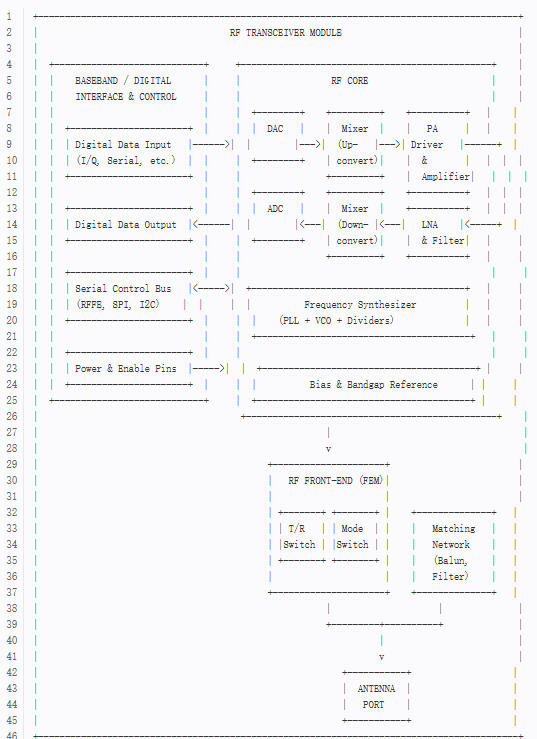
RF modules integrate important RF components into a compact solution, allowing engineers and developers to add wireless communication capabilities to electronic devices without designing complex RF circuits from scratch.
RF modules are widely used in IoT devices, embedded systems, industrial automation, remote control systems, and wireless communication equipment.
How Does an RF Module Work?
An RF module works by converting digital data into radio frequency signals for wireless transmission and converting received RF signals back into digital data.
A typical RF communication process includes:
Microcontroller
        ↓
    RF Module
        ↓
     Antenna
        ↓
 Radio Frequency Signal
        ↓
     Antenna
        ↓
 Receiving RF Module
        ↓
 Microcontroller
The RF module usually contains several important components:
- RF transceiver
- Power amplifier (PA)
- Low noise amplifier (LNA)
- Frequency control circuit
- Antenna interface
- Communication interface
Main Types of RF Modules
RF modules can be classified according to frequency range, communication technology, and application.
1. Sub-GHz RF Modules
Sub-GHz RF modules operate below 1GHz frequency bands, including:
- 315 MHz
- 433 MHz
- 868 MHz
- 915 MHz
Advantages:
- Long communication distance
- Low power consumption
- Strong penetration capability
Applications:
- Wireless sensors
- Smart meters
- Remote controls
- Industrial IoT devices
2. WiFi RF Modules
WiFi RF modules provide wireless network connectivity for embedded devices.
They are commonly used in:
- Smart home devices
- IoT products
- Industrial monitoring systems
Popular platforms include:
- ESP32
- ESP8266
3. Bluetooth RF Modules
Bluetooth RF modules are designed for short-range wireless communication.
Applications include:
- Wearable devices
- Wireless accessories
- Mobile electronics
4. SDR RF Modules
Software Defined Radio (SDR) modules provide flexible RF communication and signal processing capabilities.
Unlike traditional fixed-function RF modules, SDR devices allow users to configure different wireless applications through software.
Applications:
- RF research
- Signal analysis
- Wireless development
- Communication experiments
Learn more about SDR solutions in our:
Key Components Inside an RF Module
RF Transceiver
The RF transceiver is the core component responsible for transmitting and receiving wireless signals.
It combines:
- Transmitter function
- Receiver function
Power Amplifier (PA)
A power amplifier increases RF output power during transmission.
Higher RF power can improve communication range and signal coverage.
Low Noise Amplifier (LNA)
A low noise amplifier improves receiver sensitivity by amplifying weak RF signals while minimizing additional noise.
Antenna Interface
The antenna interface connects the RF module to an antenna.
Common antenna connections include:
- SMA connector
- IPEX connector
- PCB antenna
RF Module Applications
RF modules are widely used in many industries.
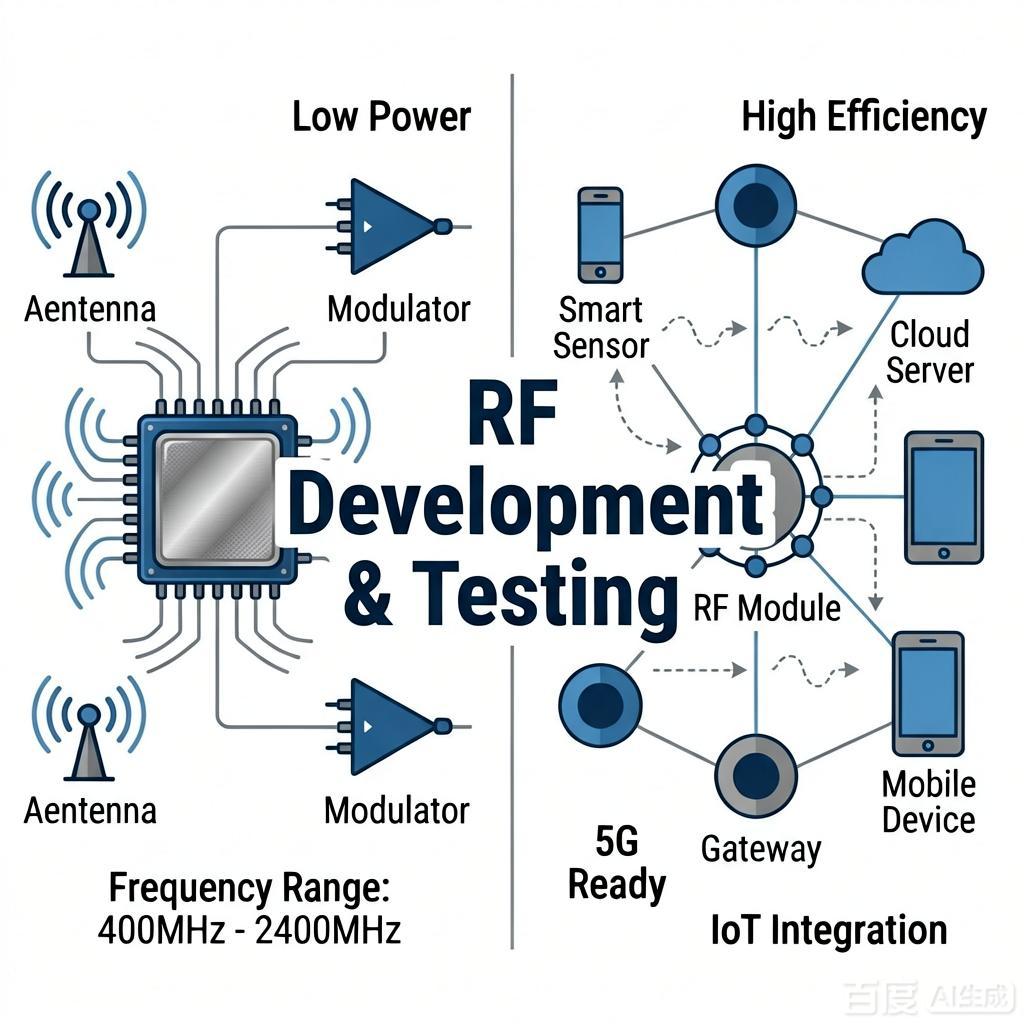
Internet of Things (IoT)
Examples:
- Smart sensors
- Smart meters
- Environmental monitoring devices
Industrial Communication
Applications:
- Wireless control systems
- Factory automation
- Remote monitoring
Consumer Electronics
Examples:
- Wireless keyboards
- Remote controllers
- Smart home products
RF Development and Testing
Engineers use RF modules for:
- Prototype development
- Wireless experiments
- RF signal testing
RF Module vs RF Chip
| RF Module | RF Chip |
|---|---|
| Complete wireless solution | Bare integrated circuit |
| Includes supporting circuits | Requires RF circuit design |
| Faster development | More customization |
| Easier for beginners | Requires RF expertise |
For most product developers, RF modules provide a faster and more reliable way to build wireless communication systems.
How to Choose an RF Module?
When selecting an RF module, consider:
Frequency Range
Choose the correct frequency according to your region and application requirements.
Communication Distance
Consider:
- Transmission power
- Antenna design
- Operating environment
Power Consumption
Low-power RF modules are important for battery-powered devices.
Communication Protocol
Common protocols include:
- WiFi
- Bluetooth
- LoRa
- Zigbee
- Proprietary RF protocols
Conclusion
RF modules simplify wireless communication development by integrating complex RF circuits into compact and easy-to-use solutions.
They play an important role in IoT, embedded systems, SDR development, and modern wireless communication applications.
Understanding RF modules is an essential step for engineers working with RF technology.
Explore more RF products, technologies, and applications in our:
